Dubrovnik Has a Crowd Problem
Dubrovnik recorded nearly 1.4 million tourist arrivals in 2024, generating over 4.5 million overnight stays, according to Croatia's Bureau of Statistics. That translates to roughly 32 tourists for every single resident — making it one of the most overtouristed cities in Europe. The city has had to cap cruise ship passengers at 5,000 per day and introduce an online booking system for its medieval walls just to keep things functional.
During the Dubrovnik Summer Festival, which runs from mid-July through late August, hotel occupancy exceeds 90%. Mid-range rooms in the Old Town average over $200 per night. The limestone streets that look so serene in photographs become slow-moving rivers of selfie sticks and guided tour groups.
None of this makes Dubrovnik a bad destination. The architecture is extraordinary. The coastal setting is genuinely dramatic. But if what you want is the Adriatic walled-city experience — the terracotta roofs, the stone alleys, the sea views, the Mediterranean food — there's a place two hours south that delivers it all for less money and with more breathing room.
Kotor: The Bay That Changes Everything
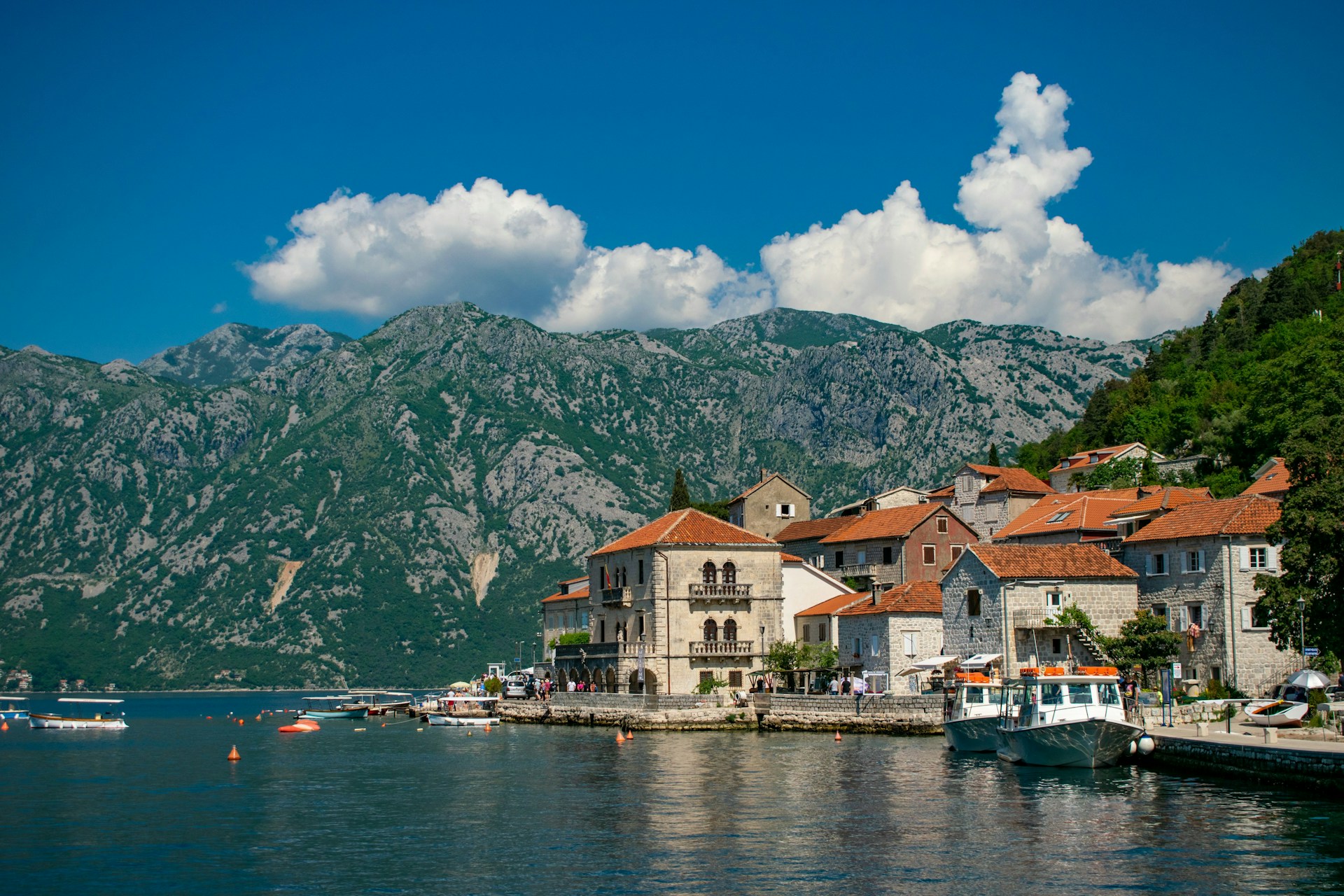
Kotor sits at the innermost point of the Bay of Kotor, a fjord-like inlet on Montenegro's Adriatic coast that UNESCO designated a World Heritage Site in 1979. The Old Town is compact and entirely car-free, enclosed by medieval walls that climb 1,200 meters up the mountainside to the ruins of the San Giovanni Fortress.
Where Dubrovnik juts out on a coastal peninsula, exposed and postcard-perfect, Kotor folds into its landscape. Black limestone mountains rise directly behind the town. The bay's still waters mirror them back. The scale feels intimate in a way that Dubrovnik, with its cruise port and resort sprawl, no longer does.
The food reflects this intimacy. Waterfront restaurants in the Old Town serve grilled squid pulled from the bay that morning, prawn risotto, fresh mussels, and sea bream. In the Škaljari neighborhood just outside the walls, Ladovina serves Mediterranean fare under a canopy of trees in an elegant conservatory. This is not resort dining. The produce is local and seasonal, the menus are short, and the portions are generous.
Kotor was named the best city to visit by Lonely Planet — not a "hidden" destination, but one that hasn't yet tipped into the overcrowding that plagues its Croatian neighbor.
Kotor vs Dubrovnik: The Numbers
Here's how the two stack up across the metrics that matter most.
Crowd factor. Dubrovnik welcomed 1.4 million arrivals in 2024, with a tourist-to-resident ratio of 32:1, according to Croatia's Bureau of Statistics. Kotor's municipality has a population of around 23,000 and sees significant summer traffic — including nearly 500 cruise ships annually — but Montenegro's total national arrivals of 2.6 million are spread across its entire coastline. Kotor's Old Town, while busy on peak cruise days, is substantially less congested on non-cruise days than Dubrovnik is on any summer day.
Average hotel cost. Mid-range hotels in Dubrovnik's Old Town average $207 per night during summer, according to Budget Your Trip and Kayak aggregated data. In Kotor, a comparable 4-star hotel averages $62 per night year-round, with summer peak prices reaching around $120. Even at peak, that's roughly 40-50% cheaper than Dubrovnik's equivalent.
Weather. The climates are nearly identical, separated by only 80 kilometers of coastline. Dubrovnik averages 28°C (82°F) in July; Kotor averages 26°C (79°F), according to Weather Spark and Climate-Data.org. Both cities share a Mediterranean climate: hot, dry summers with minimal July rainfall (24-26mm). Sea temperatures in both hover around 24°C.
Vibe match. Medieval walled Old Town, Adriatic seafood culture, Mediterranean pace.
What Kotor Has That Dubrovnik Doesn't
The Bay Itself
The Bay of Kotor is the single biggest differentiator. Often called Europe's southernmost fjord (though technically a submerged river canyon), the bay creates a geography that Dubrovnik simply doesn't have. Boat tours leave from the Old Town and stop at the tiny island of Our Lady of the Rocks, a man-made islet built by local sailors over centuries. You can swim in hidden coves, explore the Blue Cave — a sea grotto famous for its luminous blue water — and hop between the bayside towns of Perast, Prčanj, and Herceg Novi without ever getting in a car.
The Fortress Hike
Dubrovnik's wall walk is famous, and justifiably so. But it's also ticketed, time-slotted, and packed. Kotor's equivalent — the 1,350-step climb up the old fortification walls to San Giovanni Fortress — is free, unregulated, and ends with a panoramic view of the entire bay. For a more serious trek, the Ladder of Kotor is a centuries-old caravan trail that climbs the mountain behind town and doubles as a mountain biking route. A new cable car from Dub station now runs 1,316 vertical meters up to Kuk station for those who prefer their panoramas without the sweat.
Dobrota and Muo
Dubrovnik's neighborhoods outside the Old Town are largely resort-oriented. Kotor's satellite villages have actual character. Dobrota, stretching along the eastern bay, is lined with old stone palazzos built by wealthy sea captains. Muo, on the western side, is a quiet waterfront settlement with family-run restaurants and kayak rental outfits. These aren't tourist infrastructure. They're places where people live, and staying in them puts you in a fundamentally different relationship with the destination.
The Price of a Long Stay
Because Kotor is significantly cheaper across the board — accommodation, food, and transport — it's a place where you can actually slow down. A week in Dubrovnik at mid-range prices will run you $1,400+ on accommodation alone. In Kotor, that same week might cost $400-$800, leaving room for boat trips, cable car rides, and long waterfront dinners without budget anxiety.
The Honest Trade-Offs
Dubrovnik does some things better, and pretending otherwise would undermine everything we're about.
Architecture and polish. Dubrovnik's Old Town is more uniformly preserved and more visually striking at first glance. The Stradun, the main limestone promenade, gleams. The city walls circuit is a world-class attraction for good reason. Kotor's Old Town is beautiful but rougher around the edges — which is part of its appeal, but if you want picture-perfect, Dubrovnik delivers.
Nightlife and cultural programming. Dubrovnik has a more developed restaurant and bar scene, better shopping, and the Summer Festival, which has been running since 1950. Kotor's nightlife is quieter, centered around a handful of Old Town bars and the occasional open-air concert.
Beaches. Neither city is a great beach destination compared to, say, the Greek islands, but Dubrovnik edges it with Banje Beach and the Lapad peninsula. Kotor's swimming is mostly off rocks or small concrete platforms along the bay.
Infrastructure. Dubrovnik has a well-connected international airport with direct flights from most European capitals. Montenegro's infrastructure, while improving, is less developed. Getting to Kotor requires a bit more planning.
How to Get to Kotor
By air. The nearest airport is Tivat (TIV), about 8 kilometers and a 15-20 minute drive from Kotor's Old Town. EasyJet, Turkish Airlines, and several seasonal charter airlines serve Tivat, primarily from European hubs. Taxis from the airport to Kotor cost €20-30, and car rental agencies operate directly from the terminal. Dubrovnik Airport (DBV) is the other option — it's roughly two hours by car or bus from Kotor, crossing the Croatian-Montenegrin border.
By ferry. Kompas operates a seasonal high-speed catamaran from Dubrovnik's Gruž port to Kotor from June through September. The crossing takes about three hours and costs from €50 one way. The ferry drops you steps from Kotor's Old Town. Book in advance for July and August — these fill up.
By bus. Regular bus services run between Dubrovnik and Kotor year-round, taking approximately two to three hours depending on the border crossing. This is the cheapest option and runs daily.
Best time to visit. May, June, and September offer the ideal balance: warm weather (20-26°C), calmer seas, and significantly fewer visitors than July and August. Spring and early autumn also mean lower hotel prices — in some cases 50% below peak season rates.
The Upgrade, Not the Compromise
Kotor gives you the same medieval Adriatic walled city, the same Mediterranean climate, the same seafood-and-stone-alley atmosphere — at roughly half the cost and a fraction of the crowd density. Add in the Bay of Kotor, the mountain fortress hike, and the bayside villages, and you're not settling for less. You're getting a version of the Adriatic that Dubrovnik used to be before 1.4 million annual visitors changed the equation.
Don't fight the crowds.
Get early access to DestinationShift — the smarter way to discover where to travel next.
Join the Waitlist